
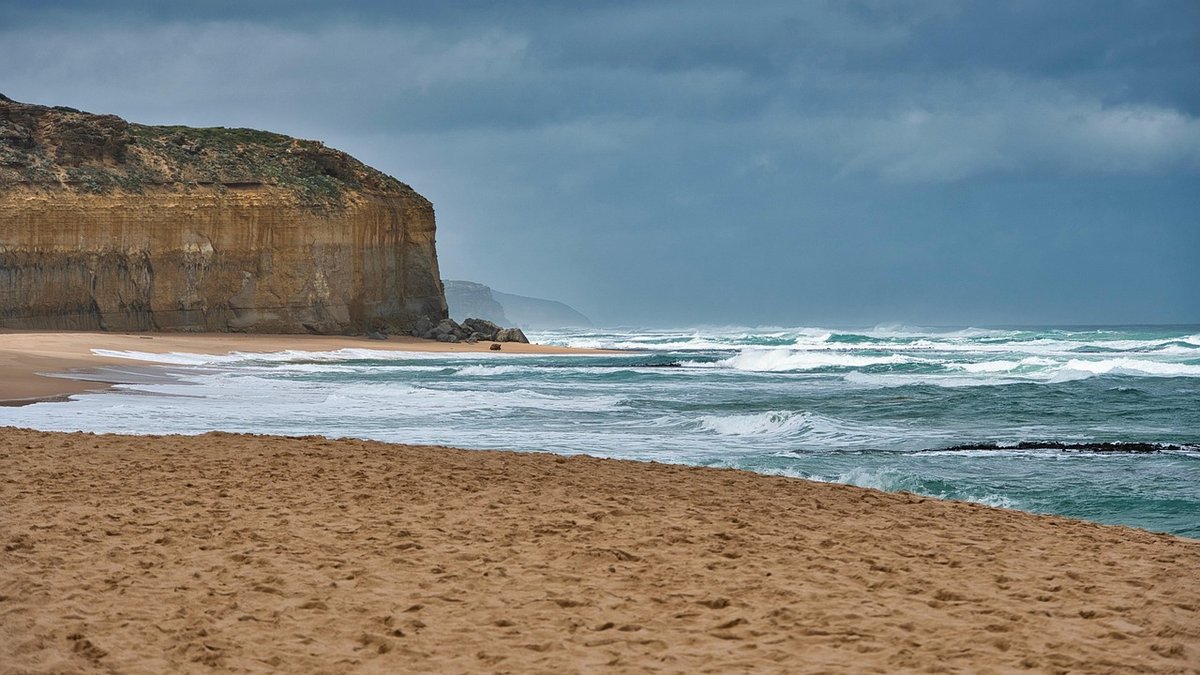
Living beside the British coast teaches you that weather is not background noise — it is the main character. The same stretch of shingle that feels Mediterranean in a still June heatwave can be a wind tunnel in February, and the difference between a glorious swim and a genuinely risky one often comes down to understanding a handful of patterns that repeat, year after year, around our islands.
This is a rough seasonal guide to those patterns, written for anyone who swims, walks, paddleboards or simply drinks tea on a sea wall. None of it replaces a proper forecast, but knowing what tends to happen — and why — makes you a far better judge of your own local shore.
From March onwards, the land starts to warm faster than the sea. Warm air rises over the fields and towns, cooler air rushes in from the water to fill the gap, and by mid-morning you have a sea breeze. It usually builds through the afternoon and dies away in the evening. On a beach, this can mean a flat calm at 9am and a choppy, white-capped surface by 3pm, with no change in the synoptic forecast at all.
Practically, that means swimming early if you want stillness. It also means the wind you feel on the promenade may be the opposite direction to the one out at sea, so check both.
Water temperature is the bigger issue. Around the UK, the sea is often at its coldest in March and April — it has spent all winter losing heat and takes months to catch up with the air. Expect 6–9°C in many places. If you have swum through winter, this is familiar. If you have not, treat it as a genuine cold-water season, not a warm-up. Short dips, a tow float, a hat, and someone watching from the shore are the sensible baseline.
By June, the sea has warmed to something between 13°C and 17°C in most of England and Wales, cooler in the north and Scotland. The sea breeze is at its most reliable, which is a gift for sailors and a mild nuisance for anyone who wanted a windless picnic.
Summer also brings sea fret or haar — a cold, damp fog that rolls in off the North Sea and can swallow an entire coastline in under an hour. It is most common on the east coast of England and Scotland when warm, moist air passes over a cold sea. You can leave a sunlit car park and be walking in 50 metres of visibility ten minutes later.
If you swim or paddle, haar is disorientating rather than dangerous in itself, but it hides other people, other craft and your own landmarks. Take a compass bearing or follow the shoreline. If you are on a paddleboard, stay close in.
Watch for offshore winds in summer too. A gentle breeze blowing out to sea feels lovely on the beach and will quietly push an inflatable paddleboard or a weak swimmer away from land. That is the classic summer rescue scenario.
Autumn is the connoisseur's season. The water is at its warmest — often 16–18°C in the south-west in September — while the air cools enough to make swimming feel pleasant rather than punishing. Atlantic swell starts arriving properly, which means surf on west-facing coasts and impressive, sometimes dangerous, waves on rocky shores.
Atlantic low-pressure systems also begin to arrive in earnest. October and November bring the first significant gales, and these often come with a rapid shift in wind direction as a front passes. A beach that was sheltered at breakfast can be fully exposed by lunch.
Two things matter here:
Winter swimming has become genuinely popular, and the benefits are real. So are the hazards. The sea sits around 7–10°C in most of the UK, colder in the north, and the air can be below freezing. Windchill is the factor people underestimate most: a 5°C morning with a 20 mph wind feels closer to zero, and that affects you badly once you are wet and standing on a beach afterwards.
Winter also brings squalls — sudden, short-lived bursts of wind and heavy rain, often with hail, arriving ahead of or behind a cold front. They can appear within minutes on an otherwise bright day, and they are what catches people on exposed headlands and open water. A squall line can turn a manageable sea into a chaotic one in the time it takes to swim fifty metres.
The practical rules are simple. Get changed quickly and out of the wind. Have warm layers waiting in a bag, not in the car. Do not stay in long enough to get properly cold, and never swim alone in winter if you can avoid it.
Forecasts tell you what is coming. Local knowledge tells you what it will do to your particular bay, your particular slipway and your particular swim route.
So keep a rough mental log. Note when the sea breeze tends to build. Note which wind direction ruins your favourite beach. Note how long after a gale the swell drops. Note where the haar usually sits. Within a year or two you will be reading the coast as fluently as any forecast, and you will find yourself choosing far better days to be in the water — which is, in the end, the whole point.

Hi, my name is Anthony kuber. I am artist and fashion designer.
I love to travel and writing blogging.
Your email address will not be published. Required fields are marked *
Software Developer & Writer
Hey, I'm Diva, a developer and writer blending code and creativity. I'm driven by a deep curiosity and a relentless pursuit of excellence. Join me as I craft digital solutions and captivating stories.


